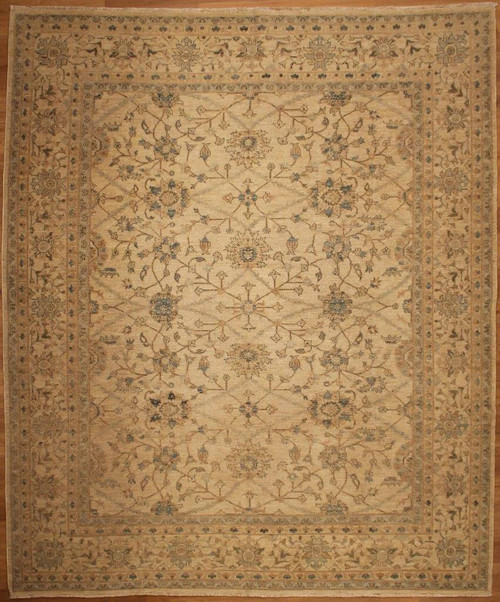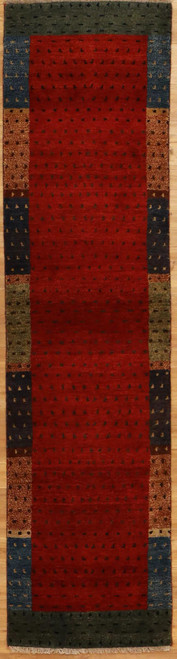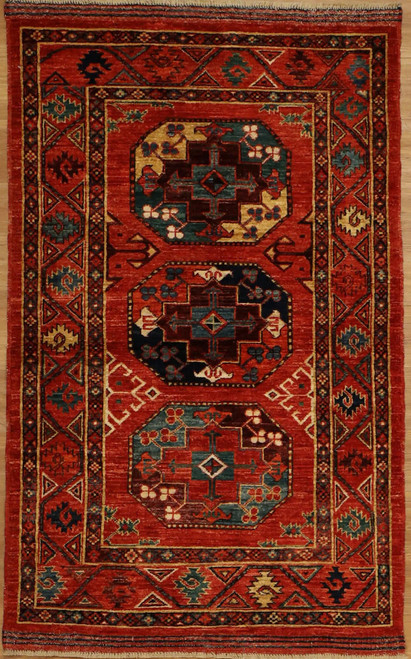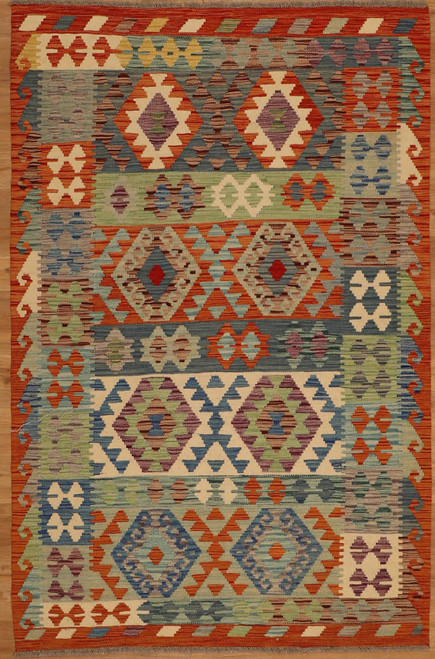
If Oriental rugs have survived centuries in comparatively good condition, it is because of careful treatment. Oriental rugs will give remarkably long service if treated with proper consideration. Their two enemies, apart from the inevitable destructive effect of wear, are moths and dampness. The former are best controlled by frequent moving or handling and by regular exposure to light and air. If rugs must be stored, regular inspection at intervals is essential. A rug in use is rarely in danger from moths. Certain chemical applications will render the wool inedible to moths. Dampness will in time rot the threads and destroy the threads and destroy the fabric so it must be avoided. If any mechanical damage is sustained, such as a cut or burn, the damage should be dealt with as soon as possible by a competent expert, because such lesions get worse very quickly. In ordinary use, quite apart from accidents, the ends and sides often tend to wear and fray, in which case the damage should be repaired. Places in the middle of the carpet that are locally worn or damaged can have new knots inserted and even large holes can be restored to make the rug almost as good as new.

![]()
Frequently rotate the rug from sunny areas to the other side of the room to equalize the effect of the sun. Continued exposure to bright hot sun rays and even indirect sunlight will cause damage to the dyed fabrics used in Oriental rugs. On bright sunny days, use window shades, shutters, or heavy curtains to reduce the sun damage. Also in terms of fading, sometimes gases and fumes (from furnaces, cooking, stoves, chimneys and auto exhaust) mix with oxygen and humidity in the atmosphere and form an acid. This acid reacts on the wool and causes deterioration and discoloration. Usually faded areas are hidden by soil and will not be noticed until the surface has been cleaned. In this case, obvious color fading can be avoided by rotating rugs from time to time so that all parts of the rug will have equal exposure.
![]()
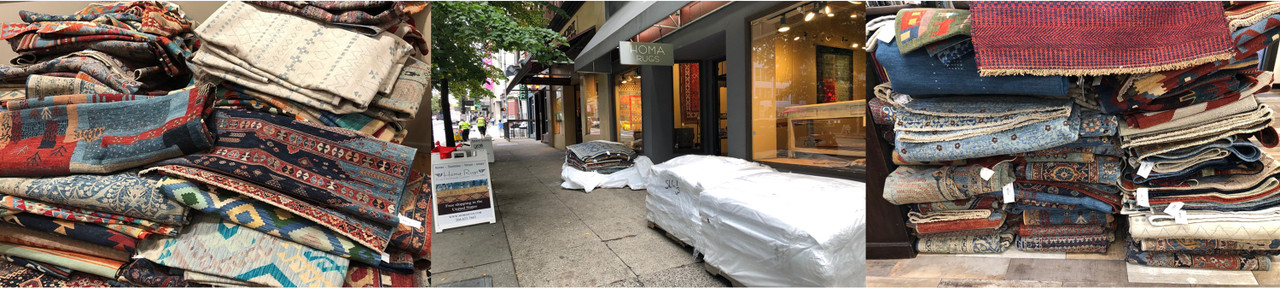
If a rug is to be stored for a long period of time, use a sheet or cloth to wrap it, but do not use an airtight plastic bag. Oriental rug needs to breathe and they will sometimes rot or mildew in a plastic bag. They could also be rolled up and kept in a chest with some Para dichlorobenzene crystals, which will have to be renewed every few months. Ideally, large carpets should be rolled around poles, the protruding ends carpets should be rolled around poles, the protruding ends of which should rest on blocks or trestles. It is advisable to let carpets lie flat on top of one another for any length of time.
DO NOT store rugs in a humid, damp, warm, or poorly ventilated room. This causes mildew which has a musty odor, discolors fabrics, and weakens them so that they fall in pieces. Never leave an Oriental rug wet. Failure to remove all the moisture might result in mildew.
DO NOT Store an Oriental rug in a hot closet the base of a rug can dry out and become brittle, destroying the strength and durability of the rug.
![]()
Moths can cause extensive damage to Oriental rug. Not only do their larvae eat the pile, but they also eat the knots on the back of a rug. Moth larvae are especially attracted to areas such as those under furniture that remain relatively undisturbed. It is quite simple to eliminate these pests and safeguard against their return. Both front and back of a carpet should be sprayed about every six months with any one of a number of available moth sprays.
![]()
The beauty and life of Oriental rugs depend largely on cleanliness and care. Lack of correct maintenance will contribute to a loss in the potential of investment.
![]()
The best is not vacuuming against the nap of the rug (The direction of the nap can easily be determined by running the hand across the pile from fringe to fringe.) Vacuuming against the nap also drives dirt back into the rug. Never vacuum the rugs fringes. The continued catching of the fringe in the suction of a vacuum cleaner causes the fringes to break and tear. As a general rule vacuum your rug with low level suction, using a newly replaced bag.
![]()
Sweeping with a broom is the best way to remove loose soil. A rug should be swept at least once a week with a broom. It helps to bring out the natural patina, or sheen, in the rug.
![]()
Oriental rugs should be washed regularly every three to five years depending on the use and the amount of traffic they bear. Never clean Oriental rugs chemically or by steam. They remove the natural oils and cause the pile to become brittle and wear more rapidly.
![]()
Take care of any kind of spill immediately. Spills of coffee or milk may be removed without permanent stain if taken care of right away. Dilute the spill with plenty of water and blot the wet area until all of the moisture is removed. Then, brush or scrape any excess immediately to prevent penetration and chemical reaction with the fibers and colors.
![]()
The most effective way of preventing a spill from turning into a stain, is blotting up as much moisture as you can with lots of clean towels, and scraping up all solids. Begin at the outer edge of the scraping up all toward the center. Do not rub because this rubbing will only spread the stain.

The best way to blot any kind of spill is to take a spoon and scoop it up, making sure not to rub the stain further into the carpet.
![]()
Always rub or brush lightly from the outer edge toward the center of stain to prevent spreading or causing “the ring” when using solvents, especially on twist rugs and pile carpets. On old, dry or stubborn stains, saturate, blot and brush. Repeat this operation as often as necessary to remove the stain completely.
![]()
You have to act quickly, which means you should keep a box containing the following on hand at all time:
* Dry cleaning fluid. Alcohol
* Glycerin
* Sponges
* Clean cloths
* A Clothes brush
* Mild detergent (containing no alkalis or bleaches)
* White vinegar
* Weak ammonia (7%) solution
1. Do it fast.
2. Blot up excess spills with paper towels. Do not rub.
3. Apply cleaning agents with clean dry, cloths, working from edge to center.
4. Do not soak.
5. Pat with paper towels. Dry with fan or hair blower.
6. Restore pile with clothes brush.
![]()
Place a blotter or brown paper bag over the spot. Put a hot iron over the blotter. Wait a few minutes until the wax is absorbed into the blotter. Repeat if necessary. Move the iron constantly to avoid overheating one spot.
![]()
Press ice cubes against spot. Wait until the gum becomes brittle and breaks off. Use spot remover to get rid of last traces.
![]()
Saturate the spot with a cloth soaked in vinegar or alcohol.
![]()
Saturate the spot with hairspray. Allow it to dry. Brush lightly with a solution of water and vinegar.